Protecting the health of doctors in training.
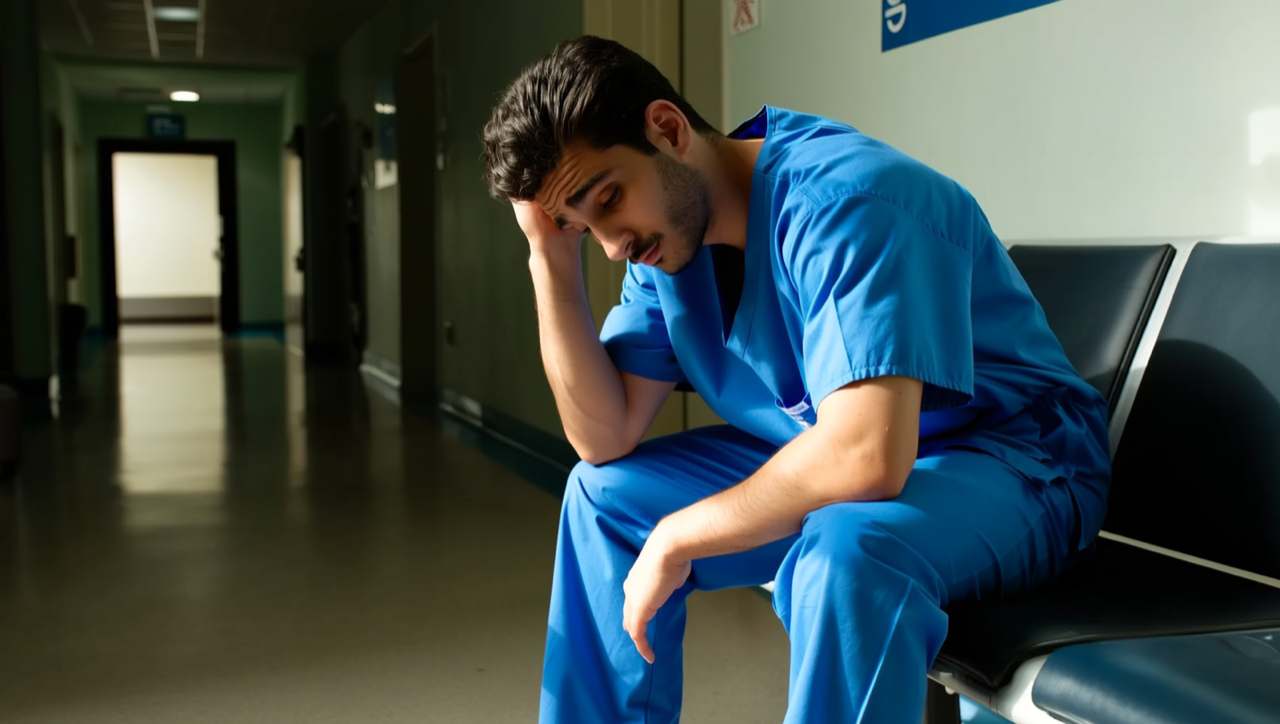
Burnout, depression, and suicidal thoughts run far higher in residency than outside it. Distress and errors travel together. A kinder schedule gives ill doctors time to seek care.
Burnout
of second-year residents reported at least one symptom of burnout, such as emotional exhaustion or detachment — in a 2018 study of 3,588 residents[22].
About one in seven (14.1%) regretted the career choice[23]. Burnout ran highest in urology, neurology, emergency medicine, and general surgery.
Depression
residents faced depression or depressive symptoms — a large review of 54 studies covering over 17,000 residents. Rates ranged from 20.9% to 43.2% depending on the screening tool[24]. Symptoms rose over time.
A separate summary found 28% of residents faced a major depressive episode during training, versus 8% of similarly aged people in the general public[25]. It also found 16% of interns reported suicidal thoughts at least once during intern year[26].
Sources: AMA / JAMA meta-analysis (Mata et al., 2015) · AAO EyeNet (28% vs 8%; 16%).
When doctors suffer, errors rise
Trainee distress is a patient-safety issue, not only a welfare issue. Depressed pediatric residents made 6.2 times the medication errors per resident-month of their non-depressed peers[72]. Internal medicine residents screening positive for depression had 2.56 times the odds of a subsequently reported major error[73]. Nationally, burnt-out physicians had 2.22 times the odds of a self-reported major error[74].
We state the limits plainly. The burnout-only link to measured errors was null in the pediatric study, so burnout alone gets no causal claim from us[72]. The national figure covers attending physicians with self-reported errors, a scope note, not resident-measured proof[74]. The direction is consistent across studies: healthier trainees make fewer mistakes. The Hours page carries the full hours-safety synthesis.
Sources: Fahrenkopf et al., BMJ 2008 (PMC2258399) · West et al., JAMA 2009 (PMID 19773564) · Tawfik et al., Mayo Clin Proc 2018 (PMID 30001832).
Why training conditions matter
Sleep loss, night shifts, and money stress pile up. One resident wrote in a leading medical journal that intern-year night shifts fed a depressive episode that nearly ended his life[35]. He survived through a care team and early openness. Many trainees stay silent over stigma or career worry.
Better hours, pay, and debt policy will not cure depression. A kinder schedule gives ill doctors time to seek care. That reason alone merits action.
Read his story: Dr. Justin Bullock: “You have to speak up.”

Share this page
Share this page with one person in training. Remind them the 988 line exists: call or text 988[27].